COSZO adds geophysical instrumentation to the Ocean Observatories Initiative (OOI) Regional Cabled Array off the coast of Oregon, delivering continuous, high-fidelity seafloor data to investigate how the Cascadia subduction zone fault works and to support the development of offshore earthquake and tsunami early warning.
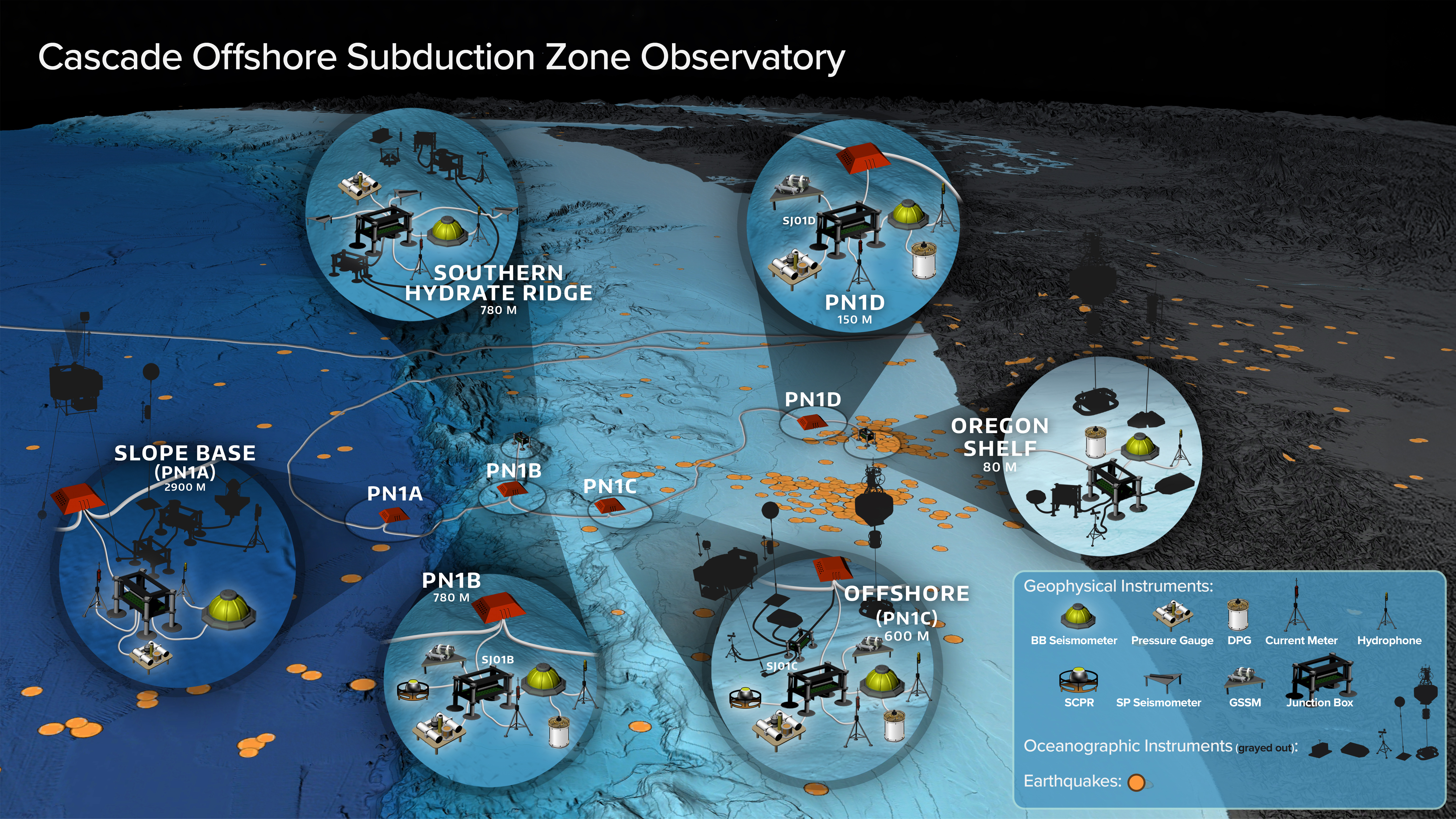
The Cascadia Offshore Subduction Zone Observatory (COSZO) is a National Science Foundation funded Mid-scale Research Infrastructure (RI-1) implementation project. Scientists and engineers from the University of Washington School of Oceanography, Department of Earth and Space Sciences, and Applied Physics Laboratory, together with the Scripps Institution of Oceanography, are adding geophysical instrumentation to the Ocean Observatories Initiative Regional Cabled Array off the coast of Oregon.
The RCA, established in 2015, was originally positioned on the continental margin to support coastal oceanography. It is also fortuitously located in a region of geophysical significance where the locked region of the Cascadia fault extends well offshore and clusters of earthquakes occur beneath the continental shelf.
The geophysical sensor suite will collect continuous, high-fidelity data to enable the scientific community to address fundamental questions on how subduction zone faults work and provide a facility to support the development of offshore early warning.
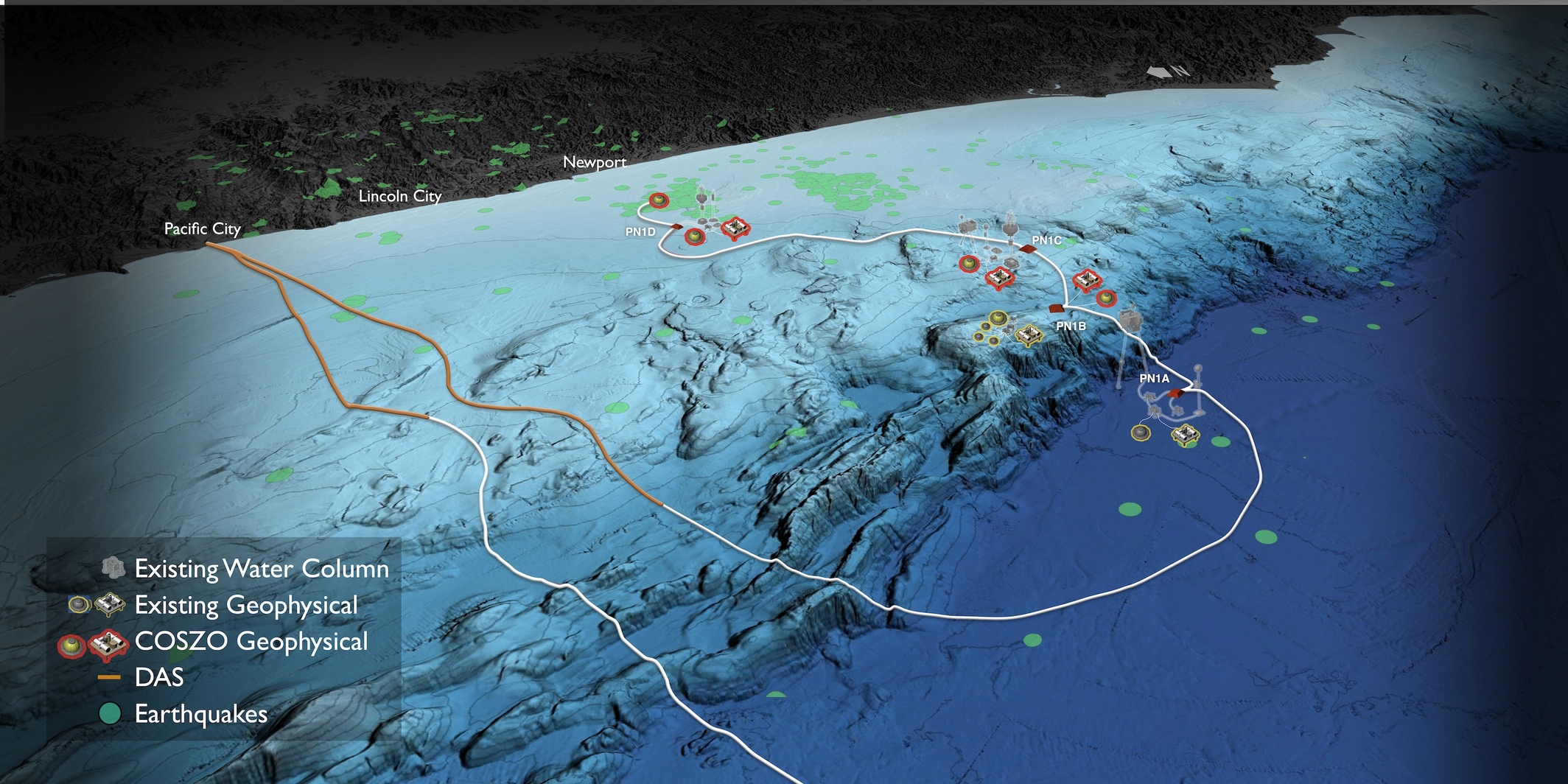
On this website you can find information related to the COSZO project, its instrumentation, the data it will collect, and our offshore earthquake early-warning efforts.
If you have any questions, please reach out — we’re happy to help.